
Why One Successor Is Rarely Enough
Founder dependency often stems from founder excellence. The challenge in succession isn’t simply finding another capable individual. It is building a company that can carry more of what the founder has been carrying alone.
Walk through a successful industrial company in the Alpine region and the founder’s influence may not be immediately obvious. There may be an experienced management team, capable engineers, long-standing customer relationships and operating processes refined over many years. The business is profitable, technically accomplished and respected in its market. On paper, it may appear to depend on no single person.
Then something unusual happens. A major customer raises a concern. A supplier misses an important deadline. A senior employee is considering leaving. A new machine or product line requires an investment decision. In each case, the organisation turns, formally or informally, to the founder.
After thirty or forty years, the founder knows which customer is genuinely worried and which is negotiating. They know which technical compromise is acceptable, which employee is ready for more responsibility and which supplier is likely to find a solution when something goes wrong. They remember the investments that worked, the ones that did not and the decisions that shaped the company’s reputation.
Much of that knowledge was never written down because there was never much reason to. The founder was there.
The business may employ a hundred people. Part of its operating system can still live inside one.
Why founder dependency develops
Founder dependency is often described as a weakness, and eventually it can become one. Decisions, relationships and technical knowledge concentrated in a single person clearly create risk. But that description misses how the situation developed in the first place.
The founder became central because their judgement proved useful. Customers learned to trust them. Employees knew where difficult decisions would ultimately be made. Suppliers knew who stood behind a commitment. Over time, the founder developed a view across the whole business that few other people had.
In many companies, that concentration of authority was not a design flaw. It helped the business move quickly, maintain standards and make difficult decisions without excessive process. A centralised model can work extremely well when an unusually capable person is at the centre of it.
The difficulty comes later. The structure that helped build the company over its first thirty years may not be the structure best suited to its next thirty. What was once a source of speed and clarity can gradually become a point of dependence.
Part of the problem is that a founder is rarely one job. They may own the company, run it, manage some of its most important customers and still be the person people turn to on investment or technical questions. Those responsibilities were never designed as a formal job description. They accumulated as the founder responded to customers, solved problems and built the business.
That is why the search for a single replacement can be misleading. One person may inherit the title, but that does not mean one person can immediately inherit everything the founder has come to represent.
Succession is more than a change of ownership
Legal ownership can move when the documents are signed. Much of the rest cannot.
Decision-making may take time to settle into a new leadership structure. Technical judgement and the history behind past decisions have to be learned. Customers, suppliers and employees who dealt personally with the founder need to build confidence in other people. Cultural legitimacy tends to take longer again.
These things overlap, but they do not move together. A founder can sell shares while remaining the person the largest customer still calls. A new chief executive can have formal authority while still learning why certain operating practices exist. Employees may understand the new organisational chart and still look instinctively to the founder when something difficult happens.
That is normal. The mistake is to treat the legal transfer as though it completes the succession.
Some founder knowledge can be documented. Contracts, customer histories, technical specifications and financial information can all be organised. The harder knowledge is less tidy.
It is the judgement built through repetition, the reason one customer is handled differently from another, or the history behind a product that was abandoned years ago. Sometimes an old practice survives because nobody got around to changing it. Sometimes there is a very good reason. Knowing the difference matters.
Research on family-business succession has recognised this for some time. A 2026 study by UBS and the Center for Family Business at the University of St. Gallen found that 60% of Swiss SME owners who had completed a succession considered knowledge transfer from their predecessor decisive to the transition’s success. Among management buyouts, the figure rose to 73%.[1]
Knowledge transfer is not something to deal with after the transaction. It is part of the succession itself.
Why a team can make the transition stronger
A single successor has a lot to absorb. They need to understand customers, earn the confidence of employees, learn the operating realities of the business, assess the existing management team and begin making decisions about the future. At the same time, the company still has to run.
Those demands tend to arrive together.
With a team, one person can spend more time with customers while someone else gets close to the organisation and its people. Capital allocation, governance and the ownership transition do not then have to compete for the same person’s attention.
That does not necessarily speed up succession. Nor should speed be the objective. What changes is how effectively the available time can be used. More relationships can be transferred, more knowledge can be absorbed and more parts of the business can receive proper attention without expecting one person to master everything in sequence.
There is an obvious qualification. More people are not automatically better.
A poorly aligned team can be worse than one capable successor. It can create politics, inconsistent messages and slower decisions. Employees and customers should not have to work out which member of the incoming group speaks for the company. Nor should a business exchange one highly accountable founder for a committee in which nobody is clearly responsible.
A team adds value only when responsibilities are genuinely complementary and accountability is clear. The University of St. Gallen study supports this point: 93% of owners surveyed identified clear roles and responsibilities as an important success factor, while 85% pointed to regular communication.[1]
Preserve what matters. Change what needs to change.
Succession is sometimes discussed as though the objective were to preserve the company exactly as it is. That is neither realistic nor particularly faithful to how most founders built their businesses in the first place.
Founders change things constantly. They enter markets, discontinue products, replace suppliers, hire people, buy equipment and revise assumptions as circumstances change. Thirty years of experience therefore contains both accumulated wisdom and accumulated habit. They are not always easy to distinguish.
A market that looked unattractive ten years ago may be accessible today. A product once considered too risky may now be technically viable. An informal practice that worked with twenty employees can become a constraint when the company has a hundred.
A good transition tries to work out what should be carried forward and what should be reconsidered.
The same applies to culture. Culture does not live in a mission statement. It shows up in how decisions are made, how customers are treated, what standards people expect and what behaviour is tolerated.
Outside experience can help here, but only if it is used carefully. People who have worked across different markets may have seen other routes to growth, different governance models or different approaches to investment. That perspective can be useful. It becomes less useful when it turns into a playbook.
Executives arrive having seen something work elsewhere and assume it should be repeated. Local customer relationships, technical traditions or apparently idiosyncratic practices are then treated as problems to be corrected rather than things to be understood.
That is often where imported best practice becomes expensive.
An Alpine industrial company should remain rooted in its people, customers and industrial context. The job of an incoming team is to widen what the company can see, not to erase what made it distinctive.
The real successor is the organisation
Preparing a company to operate beyond its founder does not mean forcing the founder to leave. Quite the opposite. It gives them more choice.
A business with deeper management, broader relationships and less reliance on one person allows the founder to decide where they still want to contribute. They may remain close to important customers, stay involved in technical development, move into a chair or advisory role, or step away completely.
Their involvement becomes a choice rather than something the company requires in order to function.
The goal is not to remove the founder. It is to remove the obligation for them to stay.
That distinction matters to the founder, but also to everyone around them. Employees know where authority sits. Customers know who to call. The incoming owner can learn without pretending to possess knowledge that has not yet been earned.
An exceptional founder may spend decades learning to carry almost every important responsibility in a company. It would be strange if the measure of a successful succession were finding another person willing and able to do exactly the same thing.
Replacing one indispensable individual with another merely resets the dependency.
A better outcome is a business in which more knowledge is shared, important relationships extend beyond one person and authority is clear enough that people know where decisions belong.
One individual may become chief executive. A complementary team may support the transition. Ownership may change.
But in the end, the real successor should be the organisation itself.
At Graculus, this sits at the centre of how we think about succession. We do not expect one person to reproduce everything an exceptional founder has done. We are bringing different capabilities around one cornerstone company, first to understand what made it successful and then to help the organisation grow less dependent on any one individual.
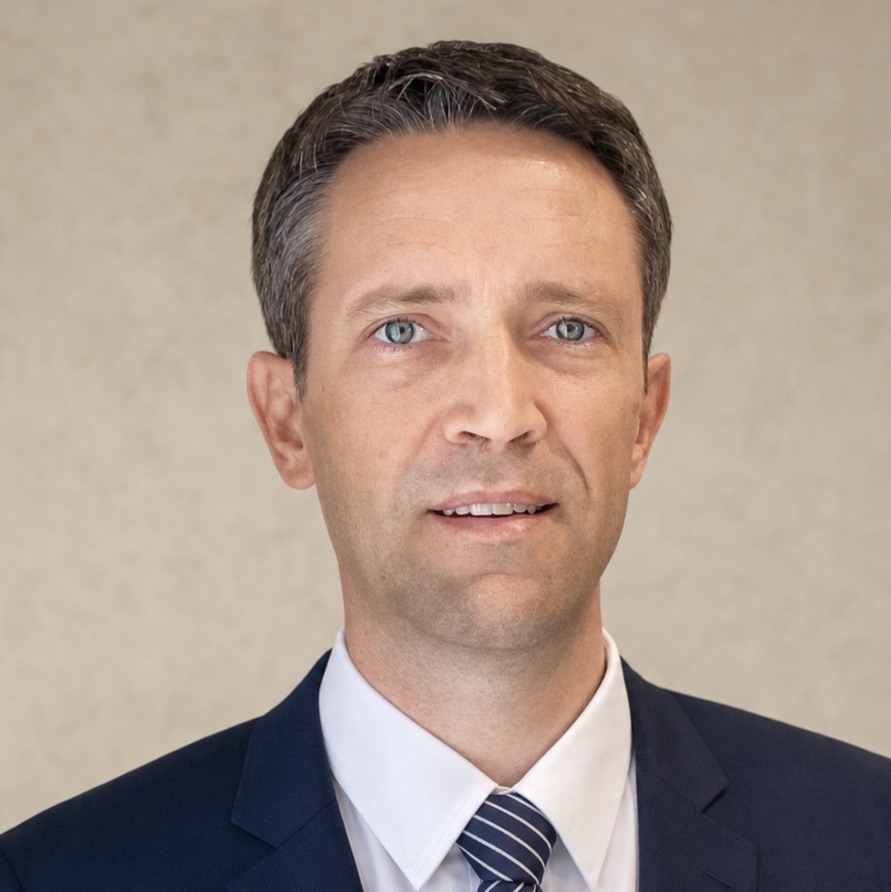
Gerhard Botha
Gerhard has more than two decades of experience across professional services, investment banking, private capital, restructuring and company building. He spent four years at PwC before twelve years at Rand Merchant Bank, where he advised founders, investment companies and private equity firms on acquisitions, capital raising, restructurings and exits. He established RMB’s Private Capital Advisory business and has worked on more than US$8 billion of completed transactions across Europe, the Middle East, Africa and Asia. Gerhard has also co-founded technology businesses, including one subsequently acquired by a US public company.
Sources
- UBS and Center for Family Business, University of St. Gallen, Understanding Business Succession as a Process, 2026.